
Fearless Evangelist for Biblical Cosmology, State of the Dead, and the One True God—Yet Fierce Against Ellen White and the Sabbath

Continuing the series on the men and women who believed and promoted biblical cosmology. Sapphire Stone, in publishing these articles, does not necessarily agree with or endorse the personal views, theories, or conclusions of the individual authors.
"...let God be true, but every man a liar..." — Romans 3:4 (KJV)
INTRODUCING MILES GRANT
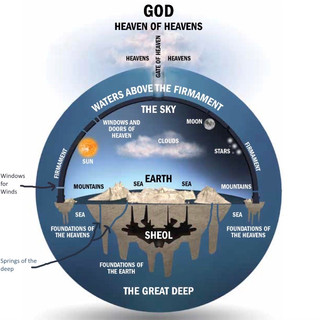
In the landscape of 19th-century American Adventism, few figures were as widely known, debated, or outspoken as Elder Miles Grant. While Seventh-day Adventists know him primarily as a fierce public critic of Ellen G. White and the Seventh-day Sabbath, Grant was also a prominent voice in the American Millerite aftermath, a leading editor of First-Day Adventist literature, and an active executive committee member of the Universal Zetetic (Flat Earth) Society in London.
Examining Miles Grant with historical fairness offers a window into the debates that shaped early Adventism, the defense of literal scriptural interpretation, and the 19th-century revival of biblical cosmology. There are lessons to learn from how Ellen White and ME Cornell represented a Christ like character in rising to the challenges and attacks of Miles Grant upon them and the truth of the Sabbath and Investigative Judgement.
Published Lifework: Books, Periodicals, and Tracts of Miles Grant.
Miles Grant was a prolific author, editor, and debater:
The World’s Crisis (Boston, MA): Grant served for decades as editor and publisher of this weekly flagship newspaper of the Advent Christian Church, using it to publish sermons, debate reports, news on prophecy, and editorial commentaries.
Positive Theology (1895): Grant's comprehensive 468-page systematic theology volume, laying out his scriptural arguments on creation, conditional immortality, the nature of God, and the Second Coming.
An Examination of Mrs. Ellen White’s Visions (1877): A published booklet detailing his polemical objections to Ellen White’s prophetic ministry.
Spiritualism Unmasked: A treatise exposing 19th-century spiritualism as a satanic delusion involving fallen angels rather than spirits of the dead.
The Earth Review (London, UK): Articles, letters, and endorsed columns published in the quarterly organ of the British Universal Zetetic Society during the 1890s.
Early Life, Family, and Relationship with William Miller
Miles Grant was born on December 13, 1819, in Torringford, Litchfield County, Connecticut. Raised in New England, Grant worked as a successful schoolteacher in his young adult years. In the early 1840s, during the height of the Millerite revival, Grant experienced a deep Christian conversion and embraced the proclamation of the imminent, personal Second Coming of Jesus Christ. He later married his wife, who actively supported his evangelistic travels.
Following the "Great Disappointment" of October 22, 1844, the Millerite movement fragmented. Grant closely aligned himself with the original leadership of William Miller and Joshua V. Himes. Unlike the Sabbatarian Adventists (who became Seventh-day Adventists under Joseph Bates, James White, and Ellen White), Grant and Miller maintained that Sunday was the Christian day of worship, that human souls are fully unconscious in death ("soul sleep"), and that Christ’s return was an immediate, unannounced event without an ongoing pre-advent "Investigative Judgment" in heaven.
Grant quickly rose to become the leading evangelist, preacher, and writer for the Advent Christian Church (commonly known as First-Day Adventists). Over five decades of ministry, he preached across 20 U.S. states, Canada, Great Britain, Ireland, and Italy.
Core Theological Beliefs
Grant's theological framework was strictly literalist, anti-tradition, and rooted in conditionalism:
Conditional Immortality & Annihilationism: Grant vehemently rejected the traditional doctrine of an eternally burning hell. He taught that humans do not possess an inherently immortal soul; immortality is a gift given only to the righteous at the resurrection. The wicked, after final judgment, are completely burned up and destroyed (annihilated).
Believer's Baptism: He maintained that water baptism was exclusively for repentant believers and must be administered by full immersion.
Non-Trinitarian Godhead: In line with many early Millerites, Grant held a non-Trinitarian view, writing in Positive Theology that God the Father alone is the supreme God, Jesus Christ is the literal divine Son of God, and the Holy Spirit is God's divine power rather than a distinct third co-equal person.
Rejection of Sabbatarianism: He viewed the Seventh-day Sabbath as part of the Mosaic ceremonial covenant fulfilled at the cross, arguing that Christians worship under New Covenant liberty on the Lord's Day (Sunday) in honor of the resurrection.
The1869 Chelsea Debate: Miles Grant vs. M. E. Cornell. The debate between Elder Miles Grant and Elder Merritt E. Cornell (M. E. Cornell) took place over several evenings in November 1869 at Library Hall in Chelsea, Massachusetts (just outside Boston, Grant's ministry base). Because Miles Grant was the editor of The World's Crisis and M. E. Cornell was one of Battle Creek’s foremost Seventh-day Adventist evangelists, the confrontation drew large crowds. The entire debate was recorded verbatim by official stenographers and published in 1870 as a 137-page book titled:Discussion on the Sabbath Question, Held in Library Hall, Chelsea, Mass., Nov. 1869, Between Elder Miles Grant and Elder M. E. This transcript became one of the most widely circulated reference handbooks used by 19th-century Seventh-day Adventists to counter anti-Sabbatarian arguments.
The Debate Propositions: The debate was structured around two primary propositions:
Miles Grant’s Proposition: The Seventh-day Sabbath was a temporary ceremonial institution given exclusively to the Jews at Sinai, which was abolished at the cross and is not binding under the New Covenant.
M. E. Cornell’s Proposition: The Seventh-day Sabbath was instituted at Creation in Eden for all humanity, forms part of God's unchangeable Moral Law (the Ten Commandments), and remains binding upon all Christians.
Miles Grant’s Key Arguments & Statements in the Debate
In his speeches, Miles Grant argued from a dispensational, First-Day Adventist perspective. His core arguments and recorded stances included:
The Sinai Origin Argument: Grant maintained that there is no command in Genesis for man to keep the Sabbath prior to Mount Sinai. He asserted: "The Sabbath of the Fourth Commandment was given to the children of Israel as a sign between God and them, as a memorial of their deliverance out of Egypt... It was part of that system which ended at Calvary."
Nailed to the Cross (Colossians 2:16): Grant relied heavily on Paul's epistles, arguing that Sabbatarianism brought believers back into Old Testament bondage: "Paul distinctly commands us, 'Let no man therefore judge you in meat, or in drink, or in respect of an holyday, or of the new moon, or of the sabbath days.' To insist that Christians must keep Saturday is to seek to bind upon the Gentile church the Yoke of Moses."
Law of Moses vs. Law of Christ: Grant contended that the entire Old Covenant law—including the Decalogue engraved on stone—was superseded by the "Law of Christ" under the New Covenant, under which worship on the Lord's Day (Sunday) or general Christian liberty prevailed.
M. E. Cornell’s Rebuttals & Defense of the Sabbath
M. E. Cornell systematically countered Grant’s points by establishing the distinction between moral and ceremonial laws:
Edenic Origin: Cornell demonstrated that God sanctified and blessed the seventh day in Genesis 2:1–3—over 2,000 years before a Jew existed: "Jesus said, 'The Sabbath was made for man, and not man for the Sabbath.' It was made for man in Eden when the race was created, not merely for the Hebrew nation two thousand years later at Sinai."
Moral Law vs. Ceremonial Law: Cornell challenged Grant's blending of the Ten Commandments with the ceremonial law of Moses: "God wrote the Ten Commandments with His own finger upon tables of stone, and they were placed inside the Ark of the Covenant. The ceremonial law was written by Moses in a book and placed in the side of the Ark. The ceremonial shadows ended at the cross, but God’s moral law stands fast forever and ever."
Apostolic Practice in Acts: Cornell cited dozens of passages in the book of Acts showing that Paul, Barnabas, and the early Christian Church routinely conducted worship and evangelism on the Seventh-day Sabbath decades after the resurrection (Acts 13:14, 13:42–44, 16:13, 17:2, 18:4)
Why the Debate Was Historic for Adventists
The 1869 Chelsea debate was significant because it brought the two competing branches of post-Millerite Adventism face-to-face in Grant’s home territory. While Grant had home-court advantage, Sabbatarians viewed the debate as an overwhelming success for several reasons:
Breaking Grant’s Monopoly in Boston: Up to 1869, Miles Grant had virtually unimpeded influence in New England, portraying Sabbatarians as an unbiblical cult. Cornell standing toe-to-toe with Grant in Library Hall forced the local community to see that Seventh-day Adventists had a rigorous, deeply scriptural foundation.
Local Conversions and Church Growth: The debate helped solidify and grow the small, struggling Sabbatarian groups in Massachusetts. Several attendees who were previously undecided sided with Cornell and accepted the Seventh-day Sabbath after hearing the full, unedited biblical evidence.
But most of all... When the Seventh-day Adventist Publishing Association in Battle Creek printed the verbatim transcript, it provided Sabbatarians with a complete "field guide". For decades afterward, when Seventh-day Adventist ministers encountered First-Day Adventist preachers using Miles Grant’s anti-Sabbath points, they turned directly to Cornell’s published transcript from Library Hall to answer them.

Opposition to Seventh-day Adventism & Ellen G. White
Throughout the 1860s, 1870s, and 1880s, Miles Grant engaged in aggressive opposition to Sabbatarian Adventism. He followed Seventh-day Adventist ministers into cities across the United States and Europe, challenging them to public debates, publishing tracts against the 1844 Sanctuary doctrine, and alleging that Ellen White’s visions were unbiblical.
(To read more about the encounters between Grant and Whites you can read a little here: https://adventistbiblicalresearch.org/articles/miles-grant-d-m-canright-and-the-credibility-of-ellen-g-white-a-new-perspective-on-the-israel-dammon-trial. It is a fascinating read)
In 1873–1874, Grant published charges in The World's Crisis claiming that Ellen White had received a vision in 1844 declaring that probation for the entire world was permanently closed (the "Shut Door" charge).
Ellen White directly addressed Grant’s claims in a letter to J. N. Loughborough:
Battle Creek, Michigan
August 24, 1874
Dear Brother Loughborough:
I hereby testify in the fear of God that the charges of Miles Grant, of Mrs. Burdick, and others published in the Crisis are not true. The statements in reference to my course in forty-four are false. With my brethren and sisters, after the time passed in forty-four I did believe no more sinners would be converted. But I never had a vision that no more sinners would be converted. And am clear and free to state no one has ever heard me say or has read from my pen statements which will justify them in the charges they have made against me upon this point.
I never have stated or written that the world was doomed or damned. I never have under any circumstances used this language to anyone, however sinful. I have ever had messages of reproof for those who used these harsh expressions.
Ellen G. White

The Unexpected Visit: Mrs. Miles Grant Meets Ellen White
Despite the fierce public theological warfare waged by Miles Grant against Ellen White, a remarkable personal interaction took place between Ellen White and Mrs. Miles Grant (Grant’s wife) during a series of meetings in Chicago.
In a private letter to her son, W. C. White, Ellen White recorded the gracious meeting that occurred between the two women:
"Did I tell you that Mrs. Miles Grant was one of my hearers last Thursday? I had an introduction to her in my room, and we had a pleasant visit. She said that she did not know that I would care to meet the wife of Miles Grant, as he and I were such sharp antagonists; but I said to her that I had made no raid upon her husband, it was he that had followed me and made a raid upon me.
She talked very pleasantly, and commended the manner in which we are doing our work in such cities as Chicago. She said that she had told her husband that as a people we were showing a commendable zeal in live missionary work..."
Miles Grant’s Direct Writings on Biblical Cosmology
Miles Grant was not merely a passive observer of biblical cosmology; he was an active writer, distributor of literature, and executive board member of the flat-earth movement. Here, in his own words and through the published record of his contemporaries, is Grant's direct position on biblical cosmology. Unfortunately, there are few "available" surviving copies of his work, especially with The Zetetic Society.
1. Grant’s Published Letter in The Earth Review (1893)
Writing directly to the editor of The Earth Review (the quarterly organ of the Universal Zetetic Society in London), Grant declared his unwavering belief in a flat Earth and linked it directly to Christ’s Second Coming: "I congratulate you on the appearance, and 'get up' of the Earth Review, as upon the true value of its contents, and I trust it will meet with the success it deserves. All known facts declare that we live on a flat earth. I am fully settled in this belief. The signs of the times are emphatic in their testimony that Jesus will soon return."— Miles Grant, The Earth Review, Vol. 1, No. 1 (1893), p. 14
2. His Condemnation of Theoretical Globe Astronomy
In his public lectures and writings, Grant rejected modern Newtonian and Copernican astronomy. In The Earth Review, Grant's core assessment of globalist science was recorded:
"Modern astronomical theory is a disgrace to the human mind."— Miles Grant, quoted in The Earth Review, Vol. 2 (1894), p. 33
3. What Lady Elizabeth Blount and Albert Smith Wrote About Him
Grant’s standing in the British and American flat-earth movements was official. In Zetetic Astronomy: Or the Sun's Motions North and South, authored by Lady Elizabeth Blount and Albert Smith ("Zetetes"), Grant was formally listed on the official executive board:
"UNIVERSAL ZETETIC SOCIETY COMMITTEE:
Dr. E. Haughton, M.D., B.A.
Elder Miles Grant (Boston, U.S.A.)
Jonathan Nicholson
Lady Blount"
— Lady Elizabeth Blount & Albert Smith, Zetetic Astronomy, p. 2
The editors of The Earth Review also commented on Grant’s zeal in importing and distributing biblical cosmology literature across North America:
"We can scarcely keep him going with papers and pamphlets—anything with the flat-earth rustle in its leaves. He thinks much as we think, and expresses himself as freely: avowing that modern astronomical theory is 'a disgrace to the human mind.'" — Editorial Board, The Earth Review, Vol. 2 (1894), p. 33
4. Grant on Literal Scripture vs. Human Speculation (Positive Theology, 1895)
In his flagship work, Positive Theology, Grant devoted extensive writing to establishing that physical reality and God's written Word must override theoretical human science:
*"There are three standards to which we may appeal: science, the Bible, and current theology. Many will not accept the Bible or current theology as a standard, but they will agree to abide by the voice of science. With this we are well pleased, for true science and the Bible are in perfect harmony. God is the author of both; and He never contradicts Himself.
When God made man, he was complete in all his parts, before he gave him life. 'The Lord God formed man of the dust of the ground, and breathed into his nostrils the breath of life, and man became a living soul.' The only difference between a living and a dead man is, one has life and the other has none. The Bible and science show most plainly, that all that leaves men, animals or vegetables, at death, is life.
The man is a real, tangible, personal being, most wonderfully organized; and only this organism can properly be called a man. Life is not a material object, that can be seen, or handled; neither is life, love, peace, joy, or thought. They all come to an end, when the organism is destroyed to which they belong. When the watch is destroyed it ceases to keep time; when man is destroyed he ceases to will, think or act. Says inspiration: 'His breath goeth forth, he returneth to his earth; in that very day his thoughts perish.'
It seems almost incredible that intelligent men can believe that the real man is not the one who is begotten, is born, lives, dies, and is buried, to be raised from the dead; but is one who has no body, neither breadth, length, nor thickness... Satan is seeking through false philosophy to lead men away from the plain, literal reading of God's Holy Word. Whatever takes away the literal, tangible reality of God's creation, His throne, and His coming kingdom is part of the grand delusion of the last days."*
— Miles Grant, Positive Theology (1895), pp. 1–3, 60
5. On Satanic Deception in End-Time Science (Spiritualism Unmasked)
In his writings on end-time delusions, Grant explicitly warned that false philosophy and theoretical science were engineered by fallen angels to lead believers away from a literal reading of Genesis:
"The political and religious aspect of these modern delusions is an important item... Satan is seeking through false philosophy to lead men away from the plain, literal reading of God's Holy Word. Whatever takes away the literal, tangible reality of God's creation, His throne, and His coming kingdom is part of the grand delusion of the last days." — Miles Grant, Spiritualism Unmasked, pp. 15–18
--------------------------------
Historical Sources & References
Grant, Miles. Letter to the Editor. The Earth Review, Vol. 1, No. 1 (January 1893), p. 14.
Grant, Miles. Positive Theology: As Proved by the Eternal Principles of Pure Reason, Facts of Science, Metaphysics, Common Sense and the Bible. Boston: Advent Christian Publication Society, 1895.
Grant, Miles. Spiritualism Unmasked. Boston: Advent Christian Publication Society, c. 1880.
Grant, Miles. An Examination of Mrs. Ellen White’s Visions. Boston: Advent Christian Publication Society, 1877.
Blount, Lady Elizabeth, and Smith, Albert. Zetetic Astronomy: Or the Sun's Motions North and South. London: Universal Zetetic Society, pp. 2–4.
Editorial Staff. "Our American Correspondents." The Earth Review, Vol. 2 (1894), p. 33.
White, Ellen G. Letter to W. C. White (1888). Published in The Ellen G. White 1888 Materials, Letter 34, pp. 523–524.
White, Ellen G. Letter to J. N. Loughborough (August 24, 1874). Published in Selected Messages, Book 1, pp. 73–74.
Behrend, Michael. Plane Truth: History of the Flat-Earth Movement, Chapter 5: "Carpenter and the American Flat-Earth Movement."
Piper, F. L. Life and Labors of Miles Grant. Boston: Advent Christian Publication Society, 1915.
From the Pen of Inspiration
WE CAN NOT COME DOWN
""If men who are engaged in presenting and defending the truth of the Bible undertake to investigate and show the fallacy and inconsistency of men who dishonestly turn the truth of God into a lie, Satan will stir up opponents enough to keep their pens constantly employed, while other branches of the work will be left to suffer. We must have more of the spirit of those men who were engaged in building the walls of Jerusalem. We are doing a great work, and we cannot come down."
— — Ellen G. White, Testimonies for the Church, Vol. 3, p. 37

Comments